


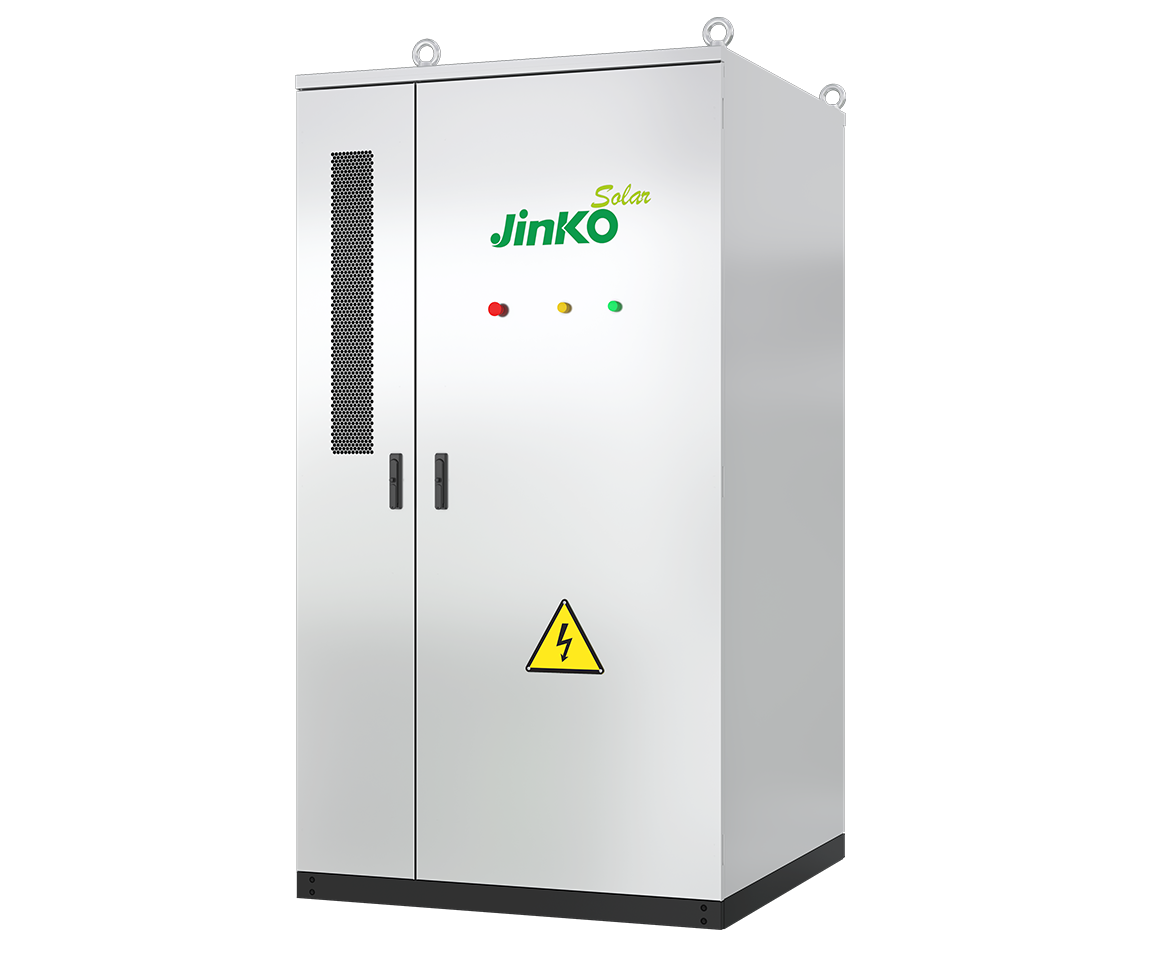
Our SunGiga Energy Storage
Our SunGiga product line is available in a range of voltage and capacity options, with each configuration being fully integrated
with the latest cutting-edge Lithium Iron Phosphate (LFP) batteries and advanced Battery Management capabilities.
Coupled with a variety of PCS power options, dedicated Thermal Management and Fire Suppression systems, SunGiga
is perfectly suited for cost-effective and rapid deployment to serve a wide variety of grid applications.
SunGiga All in One – Gewerbliche Batteriespeicher leicht gemacht
Unser SunGiga All in One ist ein 215 kWh C&I Batterieschrank mit einem eingebauten 100 kW Wechselrichter.
-

Effizient und flexibel
-

Hoch integriert
-

Intelligente Software
Batteriespeicher-News

JinkoSolar Announces Second Quarter 2024 Financial Results


JinkoSolar Announces Third Quarter 2023 Financial Results

Utility, Commercial and Industrial Energy Storage FAQs
-
How do battery energy storage systems work?
Battery Energy Storage Systems (BESS) store and release electricity to balance supply and demand in the power grid. During periods of excess energy generation, such as from renewable sources like solar or wind, BESS convert electrical energy into chemical energy and store it in batteries. When electricity demand increases or during peak usage times, the stored chemical energy is converted back into electrical energy and released to the grid. This helps ensure a stable and reliable electricity supply. Common battery types in BESS include lithium-ion due to their high energy density and efficiency.
-
What are the use cases for energy storage systems?
Energy storage systems have various use cases, including peak shaving, which reduces electricity use during peak demand periods to lower costs and ease grid strain. Load shifting involves storing energy when demand is low and releasing it when demand is high, optimizing energy use and costs. Frequency regulation helps maintain grid stability by balancing supply and demand fluctuations. Backup power provides emergency power during outages to ensure continuous operation of critical systems. Additionally, renewable energy integration involves storing excess energy generated by sources like solar and wind and releasing it when needed, enhancing reliability and efficiency.
-
How can battery energy storage systems be used for grid ancillary services?
Battery energy storage systems can provide grid stability by quickly responding to fluctuations in supply and demand. They offer essential services such as frequency regulation, which helps maintain a consistent grid frequency, and voltage support, which ensures the proper voltage levels are maintained throughout the grid. By rapidly charging or discharging, BESS can effectively balance short-term mismatches between electricity generation and consumption, enhancing the overall reliability and stability of the power grid.
-
Are battery energy storage systems safe?
Battery energy storage systems are designed with safety in mind. They are equipped with advanced fire suppression systems to quickly detect and extinguish any fires that might occur. Additionally, liquid cooling systems are used to maintain optimal battery temperatures, preventing overheating and reducing the risk of thermal runaway. These safety measures ensure that BESS operate reliably and safely, minimizing potential hazards.
-
What safety measures does Jinko ESS take in its BESS solutions?
Jinko ESS ensures safety in its BESS solutions through several measures. The Battery Management System (BMS) primarily monitors and ensures safety, with a five-tier protection system from cell to system, segregated compartments to prevent thermal runaway, and multi-tiered leak prevention. Electrical safety includes a three-stage fuse system for fault detection, anti-arcing design, and real-time liquid leak detection. For fire safety, there is triple-layer fire protection with aerosol, water, and PACK-level suppression, along with various detection devices and fire barriers. An early warning system monitors battery parameters, and the BMS provides three levels of protection with multiple warning actions. Safety by design features include gas detection, temperature sensing, smoke detection, active fire containment, aerosol suppression, sprinkler systems, intelligent command and control, and a multi-level alarm system. Jinko ESS adheres to regional standards, uses standardized components, implements stringent quality control, embeds safety features at all levels, and manages thermal conditions through liquid cooling systems, ensuring comprehensive safety in their BESS solutions.
-
Are battery energy storage systems noisy?
Battery energy storage systems (BESS) can generate some noise, but Jinko’s SunTera 5 MWh system, for instance, is designed to meet strict noise requirements, particularly in the EU. Equipped with advanced liquid cooling technology, the noise level of this system is comparable to that of a dishwasher, which is moderate and not overly intrusive. This ensures that Jinko ESS solutions have a minimal impact on the surrounding environment, meeting stringent standards and providing a quieter operation.
-
How to size battery energy storage systems?
Sizing battery energy storage systems (BESS) involves several critical factors. First, the desired energy capacity must be determined, which is the total amount of energy the system can store, typically measured in kilowatt-hours (kWh) or megawatt-hours (MWh). This depends on the specific energy needs of the application, whether for residential use, commercial operations, or grid support. Second, the power output requirements are essential. This is the rate at which the stored energy can be delivered, measured in kilowatts (kW) or megawatts (MW). Applications requiring high power over short durations, such as frequency regulation, will have different sizing needs compared to those needing steady power over extended periods, like load shifting. Third, the intended applications significantly influence system sizing. For example, peak shaving demands a different storage capacity and power output than renewable energy integration or backup power. Understanding the application’s specific demands ensures the BESS is appropriately sized to meet its operational goals.
-
What does a battery energy storage system look like? (components)
A battery energy storage system (BESS) generally comprises several key components. At its core are battery modules, which store the electrical energy. These modules are mounted on racks for organization and accessibility. Inverters are used to convert the direct current (DC) from the batteries into alternating current (AC) for use in the grid or by electrical systems. The system also includes a control system that monitors and manages the operation of the batteries, ensuring optimal performance and safety. Cooling systems are essential to maintain appropriate temperatures and prevent overheating. Additionally, safety mechanisms such as fire suppression systems and leak detection devices are integrated to protect against potential hazards. Together, these components work to ensure the efficient and safe operation of a BESS.
-
Why should I purchase battery energy storage systems?
Purchasing battery energy storage systems (BESS) offers several compelling benefits. They provide a reliable way to store excess energy generated from renewable sources, such as solar or wind, ensuring that it can be used when production is low or demand is high. This enhances energy reliability and reduces dependence on the grid. BESS also help in managing energy costs by enabling load shifting, where energy is stored during off-peak hours and used during peak times, potentially lowering electricity bills. Additionally, BESS can improve grid stability by providing services like frequency regulation and voltage support. They offer backup power during outages, ensuring continuity for critical operations. Investing in BESS also supports environmental goals by integrating clean energy sources more effectively and reducing reliance on fossil fuels. Overall, a BESS provides financial, operational, and environmental advantages, making it a valuable investment for both individual and commercial energy needs.
-
How do battery energy storage systems enhance electric vehicle (EV) charging?
Battery energy storage systems are instrumental in accelerating electric vehicle adoption. Solutions like the SunGiga 344kWh play a crucial role by efficiently managing the EV charging process. They store energy during off-peak hours, when electricity is cheaper and more abundant, and release it during peak hours, optimizing the charging load. The SunGiga’s design maximizes space utilization, with efficiency exceeding 38%, ensuring not only smooth installation and maintenance but also flexibility for future capacity expansion. This approach enhances the overall efficiency and reliability of EV charging infrastructure.
-
What is negative pricing and how does it contribute to a greener future?
Negative pricing is a financial mechanism that incentivizes participation in cleaner energy grids by offering payment for using electricity when prices are negative. This typically occurs during periods of high renewable energy generation and low demand. Intelligent energy storage solutions like SunTera and SunGiga can capitalize on this opportunity by providing flexibility in managing energy supply and demand, which helps ensure cost efficiency. During a negative pricing event, a battery can effectively earn revenue twice: by charging when prices are negative and then discharging when prices are positive. This not only reduces energy costs but also supports the integration of renewable energy sources, contributing to a more sustainable and environmentally friendly energy system.
-
What are the types of batteries used in BESS?
Lithium-ion batteries are popular for their high energy density and long cycle life, making them suitable for a wide range of applications, from residential to large-scale grid services. Lead-acid batteries, known for their reliability and lower upfront cost, are commonly used in less demanding applications. Flow batteries, with their ability to independently scale energy and power, offer a unique advantage for long-duration energy storage, albeit at a higher complexity and cost. Each battery type brings its own set of characteristics, making the selection a critical component of BESS design and application.
-
What is cell-to-cell active balancing and how does it benefit a BESS?
Cell-to-cell active balancing is a key feature of advanced battery energy storage systems like our SunTera. This technology optimizes energy efficiency by ensuring that each lithium iron phosphate battery cell operates at its best. During both charge and discharge cycles, the system redistributes charge among cells to maintain balance and performance. By employing this technology, Jinko ESS’s SunTera not only enhances the overall efficiency of energy storage but also extends the lifespan of the battery system. With a Round Trip Efficiency (RTE) improvement of 1%, SunTera delivers cost savings and reduces energy consumption, making it a valuable addition to any organization looking to maximize both performance and efficiency.
-
What is Round Trip Efficiency?
Round Trip Efficiency (RTE) measures the effectiveness of a battery energy storage system in storing and then returning energy. It is the ratio of the amount of energy retrieved during discharge compared to the energy used during charging. A higher RTE indicates better performance and less energy loss. SunTera’s advanced technology achieves an impressive RTE improvement of 1%, which translates to greater cost efficiency and reduced energy consumption. This means you get more value from every unit of energy stored, enhancing the overall efficiency and effectiveness of your energy storage system.
-
What is an Energy Management System (EMS) in relation to battery storage?
The EMS essentially manages the energy flow with the system. Think of it as the brains behind deciding when and how the system should store or distribute energy. This decision-making logic is designed to optimise performance, maximise revenue earning potential whilst also ensuring the battery is operated in a manner which does not compromise the longevity of the asset. Additionally, the EMS works with the overall Battery Management System which is responsible for keeping the system safe and protecting it from damage. So, in simple terms, the EMS tells the energy storage system what it should do maximise profits in a safe and controlled way.
-
How does an Energy Management System (EMS) work in a storage system?
In technical terms, the EMS continuously monitors and analyses critical data points, such as energy demand, supply from renewable sources like solar panels or wind turbines, and the current state of the battery storage system. Using advanced pattern algorithms, the EMS predicts future energy needs and makes decisions based on when to store energy in the batteries and when to release it back to the grid or supplying energy to the factory or building to which it is connected. Correct decision making logic can benefit the local grid by balancing supply and demand in real-time. Additionally, the EMS optimises the battery’s health by controlling the stress which the batteries experience during operation by limiting charge and discharge levels when necessary. This is important for maximising battery lifetime and increasing overall whole-life efficiencies
-
What are the core parts of an Energy Management System (EMS)?
An Energy Management System (EMS) for a Battery Energy Storage System (BESS) is composed of several core parts. Hardware includes sensors and meters for real-time energy tracking, and controllers that execute the EMS’s software decisions. Communications involve data acquisition systems and network infrastructure to ensure reliable data flow between the EMS, power grid, and renewable sources. Software automation uses algorithms to optimize battery operations, enhancing efficiency and revenue. The user interface provides a dashboard for monitoring system performance and generating reports. Grid support functions like peak shaving and load shifting improve grid stability. Safety features include fault detection and fire emergency protocols to protect the system and its operators. Finally, data analysis tools aggregate and interpret energy data to guide decision-making and forecast future demand.
-
What are the 3 key benefits of an integration of an Energy Management System (EMS) into a BESS solution?
Integrating an Energy Management System (EMS) into a Battery Energy Storage System (BESS) provides three main benefits. It maximizes renewable energy use by efficiently storing and utilizing energy from sources like solar and wind. It enhances efficiency by optimizing when to store and use energy, improving cost-effectiveness. Lastly, it improves grid stability by balancing supply and demand, ensuring a reliable energy supply. Future advancements may further boost these benefits with predictive analytics and AI.
-
What are the key features of the SunTera 5 MWh?
The SunTera 5 MWh by Jinko ESS offers several key features. It boasts higher energy efficiency, reaching up to 94%, thanks to its advanced 314Ah cell technology. The system provides better energy density and a longer service life, ensuring both durability and performance. Additionally, it is designed to be cost-effective, making it a strong choice for reliable renewable energy storage. For more details on the new range, connect with our sales team.

